
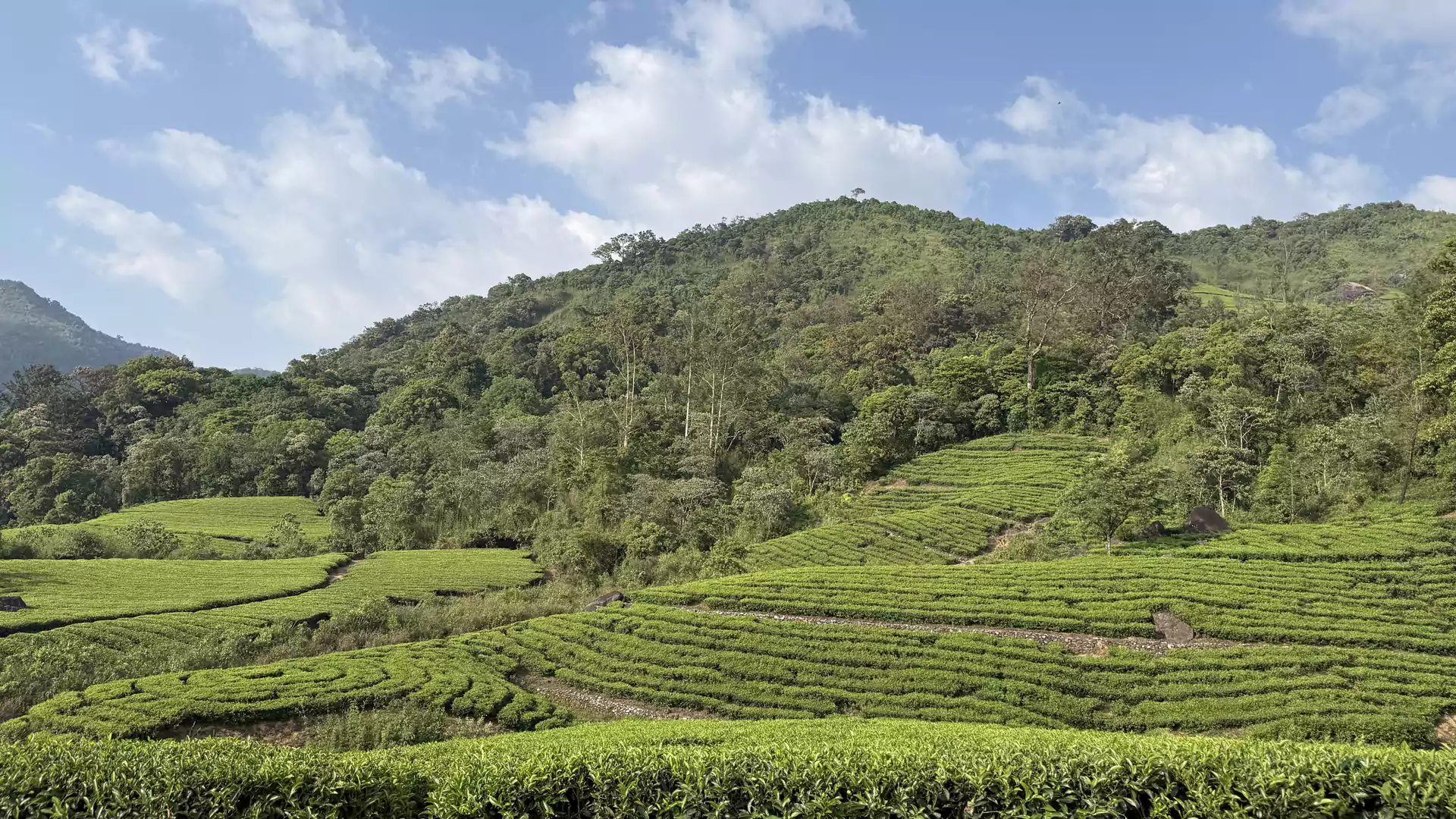
Rolling tea plantations. Mist-covered mountains. Rare wildlife. Quiet villages. Hidden waterfalls. Warm people. Welcome to Munnar, where every winding road leads to another unforgettable experience.
Ask five people why they loved Munnar and you’ll get five different answers. That’s the point.
People don’t return to Munnar for one landmark. They return because the region rewards slow travel — and that’s exactly the kind of stay a homestay, rather than a resort, is built for.
| Fact | Detail |
Altitude |
1,500 – 2,695 m above sea level |
District |
Idukki, Kerala |
Climate |
Cool year-round; 10–25°C, cooler Nov–Feb |
Best season |
September – May (post-monsoon to pre-summer) |
Language |
Malayalam (Tamil widely spoken near the Tamil Nadu border) |
Nearest airport |
Cochin International Airport (COK) — approx. 110–120 km |
Nearest railway station |
Aluva (~108–120 km) or Ernakulam (~120–125 km) |
Distance from Kochi |
~130 km (4–4.5 hr drive) |
Distance from Madurai |
~170 km (via Bodinayakanur/Top Station route) |
Distance from Coimbatore |
~150–160 km |
Currency |
Indian Rupee (₹) |
Known for |
Tea plantations, Nilgiri Tahr, Anamudi Peak, Neelakurinji bloom (once every 12 years — next expected ~2030) |
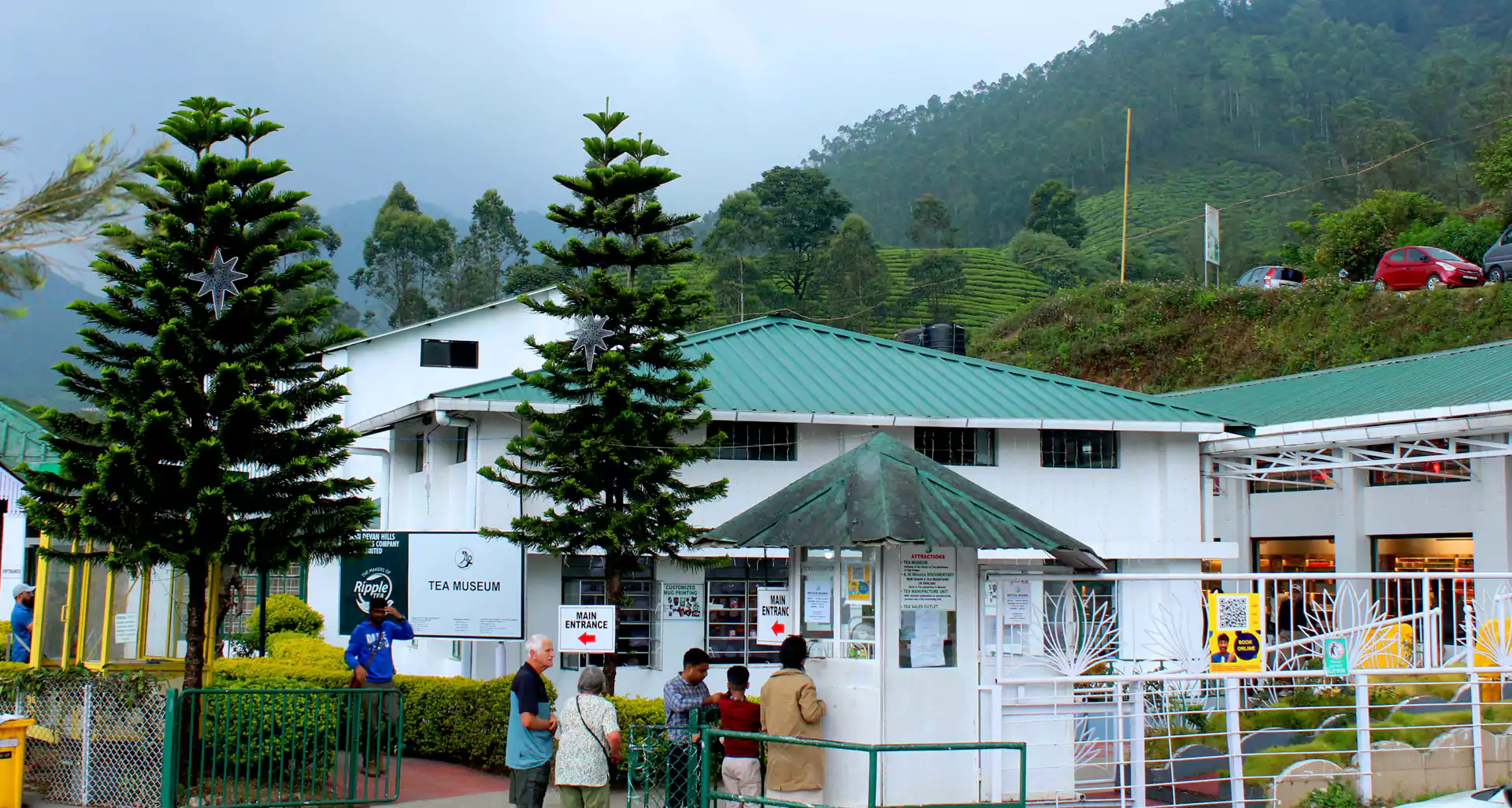
Long before Munnar had a name recognisable to travellers, these hills belonged to the Muthuvan people — a semi-nomadic community who moved with the seasons through dense, fever-prone forest. It’s their legacy in the name itself: local tradition holds that two Muthuvan guides, Kannan and Devan, led early British surveyors through the terrain, and “Kannan Devan Hills” stuck.
The British had passed through before that — Colonel Arthur Wellesley in 1790, chasing Tipu Sultan; Lieutenants Ward and Connor in 1817, on a formal survey. But the hills didn’t change hands until 1877, when the Poonjar royal family leased roughly 136,600 acres to a British planter named John Daniel Munro for an annual rent of ₹3,000. Munro’s syndicate experimented first — coffee, cardamom, cinchona — before a planter named A.H. Sharp proved in 1880 that tea was what these slopes were made for.
By 1897 the Kannan Devan Hills Produce Company (KDHP) existed to run the estates at scale, and in the space of thirty frantic years — 1895 to 1925 — the roads, hydro stations, factories and churches that still define Munnar’s skyline went up. A catastrophic 1924 monsoon flood nearly undid it all; the estates rebuilt anyway.
Ownership kept shifting long after the British left. Tata Group partnered with Finlay Muir in 1964 and took full control as Tata Tea in 1983. Then, in 2005, came the change that quietly defines Munnar’s tea industry today: Tata transferred ownership of KDHP to its own workforce, making it one of India’s largest employee-owned tea companies. Walk through an estate today and you’re walking through land the pickers themselves hold a stake in — a detail almost no visitor is told, and one worth knowing.
Did you know? The Neelakurinji flower that occasionally turns Munnar’s hills purple-blue blooms only once every 12 years. It last flowered in 2018; the next bloom is expected around 2030.
Tea is still the backbone. Estate workers — many descended from Tamil labour communities who settled here generations ago — live in “lines” (estate housing) built by KDHP, with company-run schools, ration shops and healthcare that date back to the plantation era and continue under the employee-owned model. Spice cultivation — cardamom, pepper, coffee — runs alongside tea in the surrounding valleys, especially toward Marayoor and Kanthalloor.
Tourism has become the second major economic engine, and in places like Adimali, Mankulam and the villages toward Anakulam, it’s increasingly the primary one — homestays, jeep-safari operators, and small guiding businesses now support families who once relied solely on estate wages or subsistence farming.
That growth has consequences the region is actively managing. Munnar draws well over a million overnight visitors a year, with day-trip footfall pushing real numbers higher — enough that Kerala’s Tourism Department has launched a formal push to make Munnar an International Responsible Tourism Destination, targeting net-zero tourism, a single-use plastic ban enforced since October 2025, and rural tourism programs that route income directly into villages rather than only into large hotels.
For a visitor, the practical version of all this: expect stricter plastic rules than you might be used to, growing homestay and village-tourism options, and a real, official push toward the kind of small-footprint travel a family-run stay already represents.
Local food note: Kerala breakfast — idli, dosa, appam, puttu-kadala, idiyappam — is the daily ritual here, not a tourist add-on. If you want to understand Munnar’s rhythm, start there.
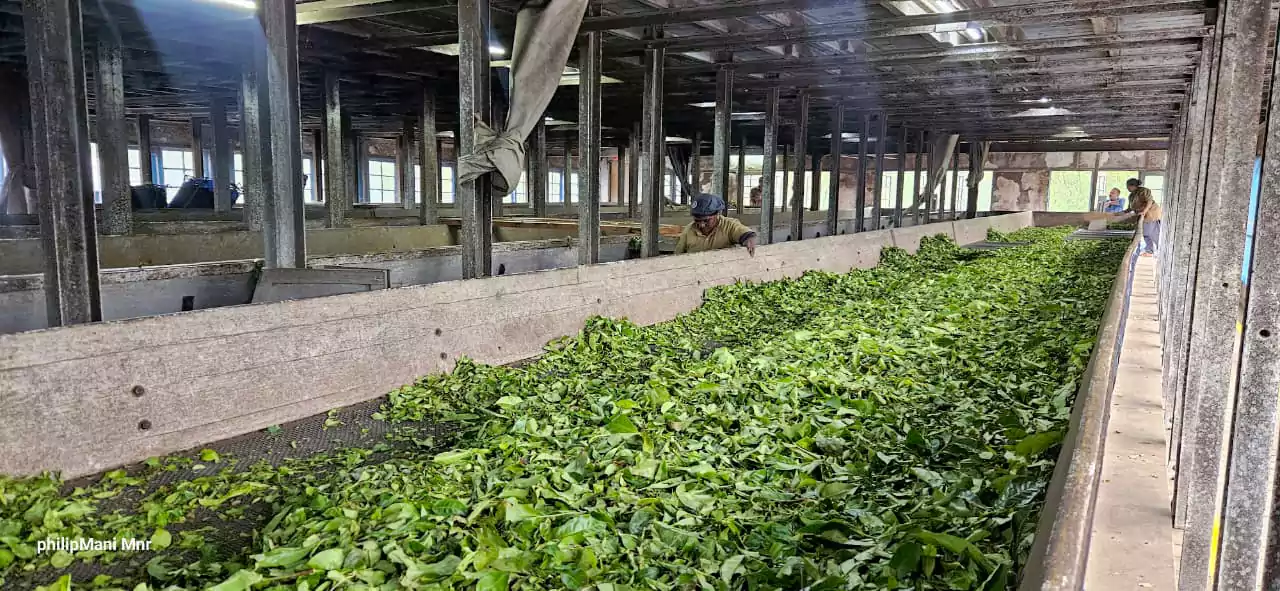
KDHP Tea Museum Distance from Munnar town: ~2 km · From SGH: ~32 km · Time needed: 1–1.5 hrs India’s first tea museum, on the Tata/KDHP Nallathanni Estate. Guided walkthrough of withering, rolling, drying and grading, plus a tasting session.
Local tip: Go late morning after the first tour groups clear out — the tasting room is quieter.
Lockhart Tea Estate & Factory / Gap Road Distance from Munnar: ~10–23 km · Time needed: 1.5–2 hrs (factory) or a scenic half-hour drive-through (Gap Road) One of the oldest working estates, still processing “orthodox” tea by hand-era methods. Gap Road itself — the drive through the estate — is one of the most photographed stretches in Munnar, heart-shaped valley views included. Best for: photographers, first-time visitors wanting the classic Munnar shot.
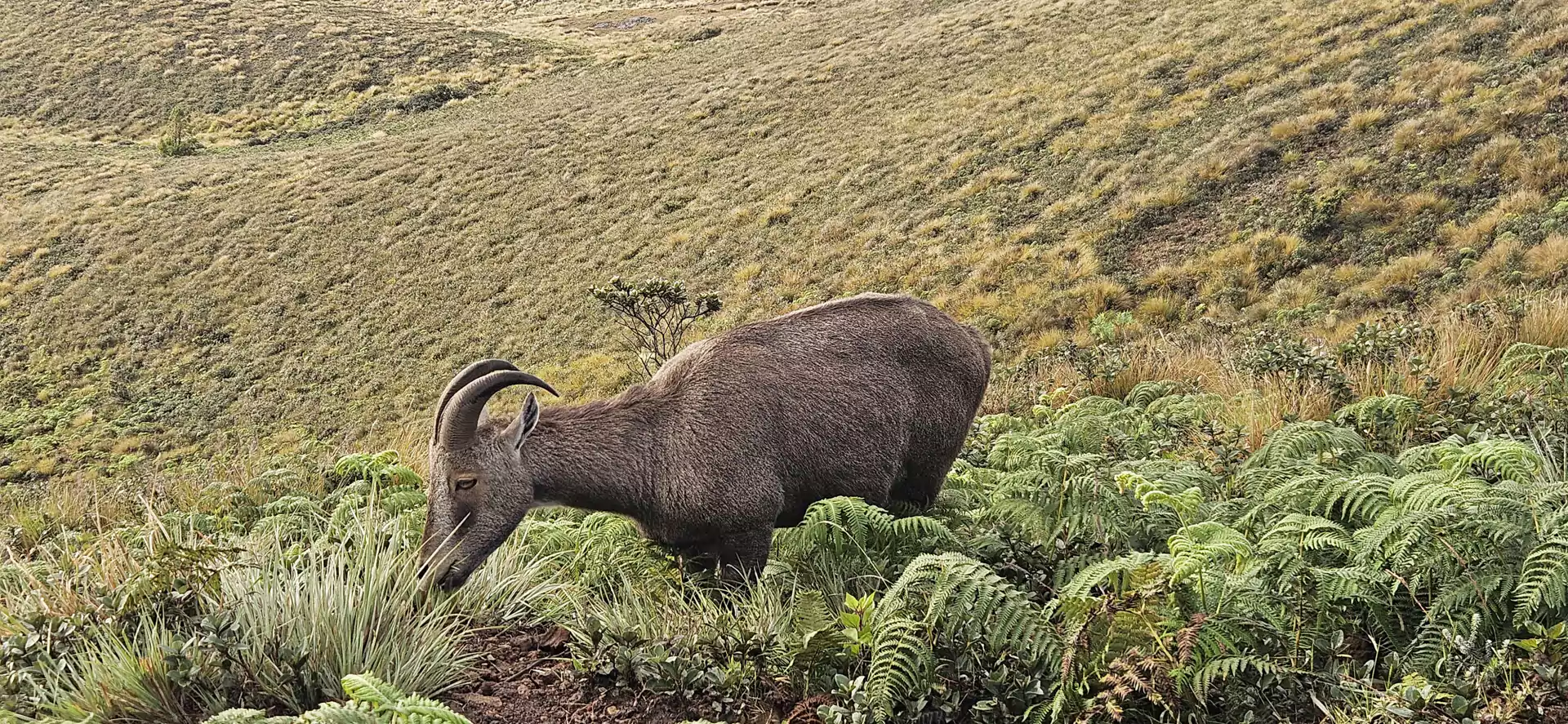
Eravikulam National Park Distance from Munnar: ~8–13 km · Time needed: 2–3 hrs · Entry: ~₹200 (Indian adult), ~₹500 (foreign national), 2026 rates Kerala’s first national park and home to the world’s largest population of the Nilgiri Tahr — sightings in the open Rajamalai zone are close to guaranteed. Anamudi Peak (2,695m, highest point south of the Himalayas) looms over the park, though its summit is closed to protect the endemic Resplendent Bush Frog. Closed roughly Feb–April for Tahr calving season — always confirm current dates before visiting.
Local tip: Arrive by 8 am. Queues for the shared park bus can run 2+ hours by mid-morning in peak season.
Mattupetty → Echo Point → Kundala → Top Station One continuous route, best treated as a single half-day outing rather than four separate trips.
Stop |
Distance from Munnar |
Highlight |
Mattupetty Dam |
~11–13 km |
Boating, elephant sightings on the banks |
Echo Point |
~15–17 km |
Natural echo phenomenon, lakeside boating |
Kundala Lake |
~20–22 km |
Tea-slope reflections, pedal boats & shikaras |
Top Station |
~32 km |
Highest point on the route; Kerala–Tamil Nadu border views |
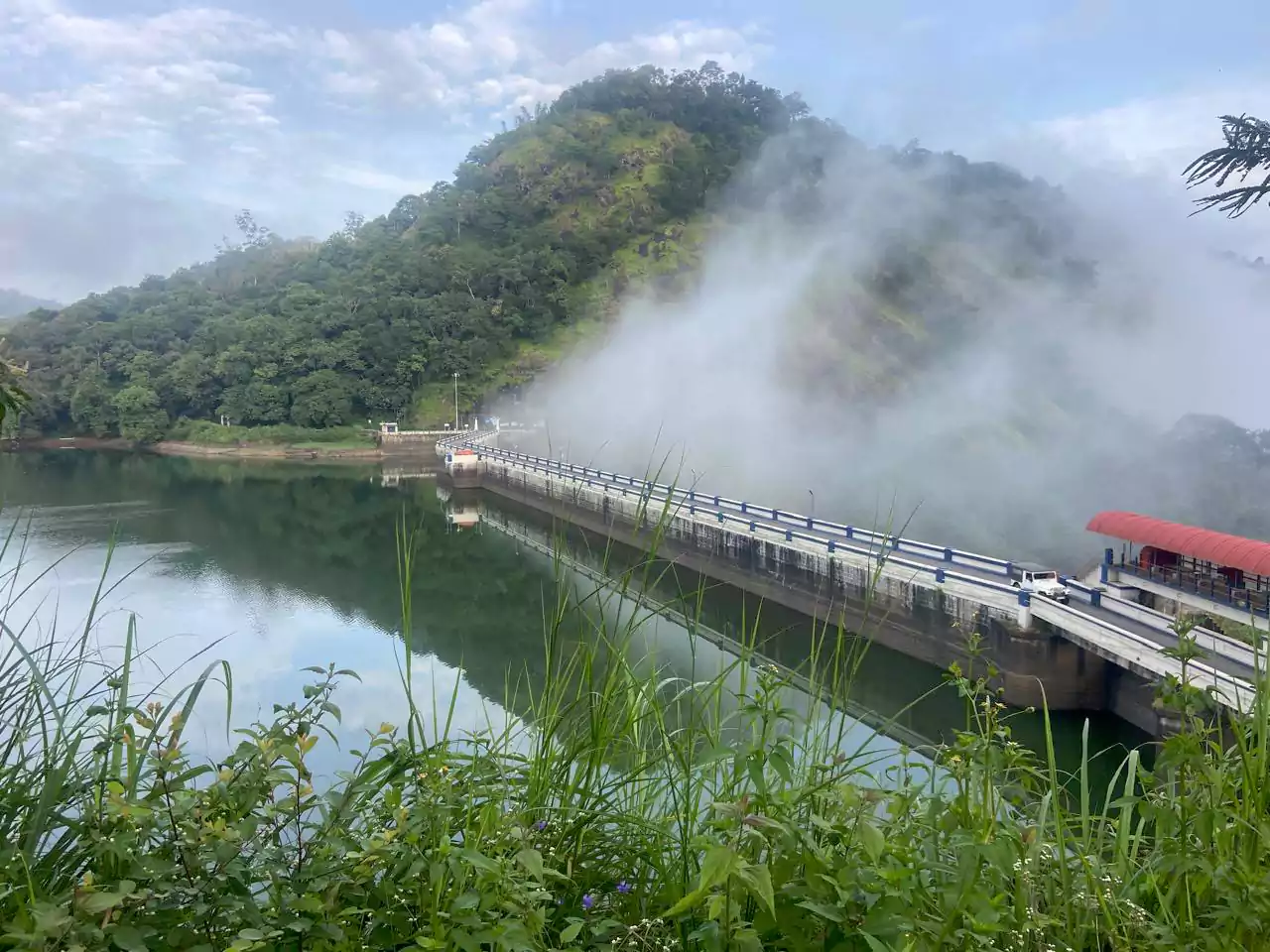
Anayirangal Dam — ~22 km from Munnar via Gap Road. Elephant sightings 8:30–10 am, boating available, ~₹30 entry.Ponmudi Dam — ~25 km from Munnar, but genuinely closer to Sceva’s Garden Home via Adimali–Anachal. Quiet, uncrowded, best post-monsoon. Idukki Arch Dam — ~47 km from Munnar. Asia’s highest arch dam, part of a three-dam hydro complex. Half-day trip on its own; check current access rules as the site has had periodic tourist closures.
Kolukkumalai Tea Estate — the world’s highest tea plantation (~7,900 ft), still run on 1930s vintage machinery. Distance: ~30–38 km from Munnar, but the final stretch is jeep-only via Suryanelli (~30 km / 1.5 hrs from Munnar, then a 4×4 ascent). Best for: sunrise chasers. Plan a 4:30–5 am start — this is a full-morning commitment, not a quick stop.
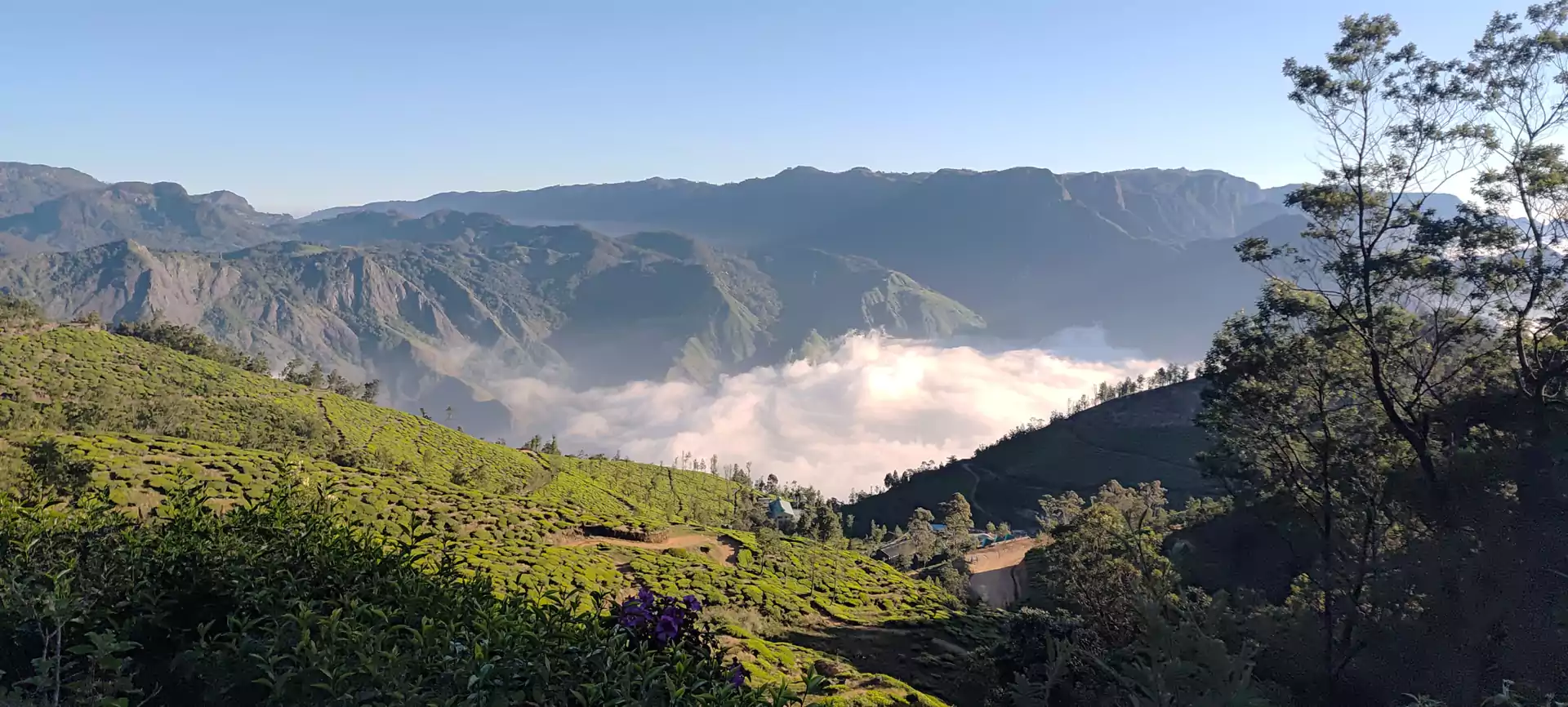
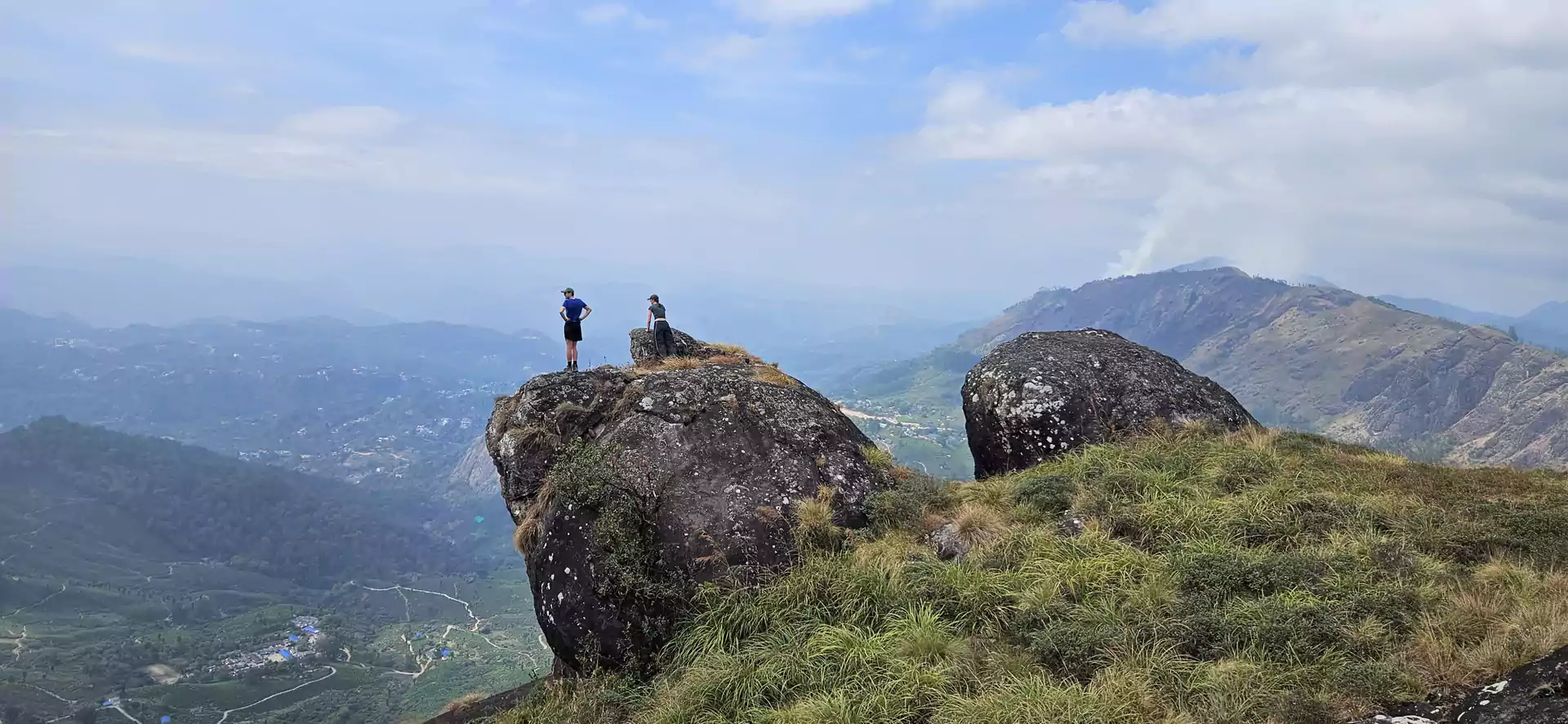
Meesapulimala — second-highest peak in the Western Ghats (2,640m), via Rhodo Valley (~20–25 km from Munnar). 8 km round trek, 4–6 hrs, through grassland, shola forest and rhododendron groves. Permit mandatory through KFDC Munnar (~₹500–1,000 without accommodation); overnight stay options available. Best Sept–Feb.
Chokramudi Peak — ~7,200 ft, via Pothamedu/Gap Road (~16–22 km from Munnar). Easier, beginner-friendly, 4–5 hrs. Entry/guide fee ~₹400 (Indian), ~₹600 (foreign). Best for: first-time trekkers wanting a real summit without a permit process.
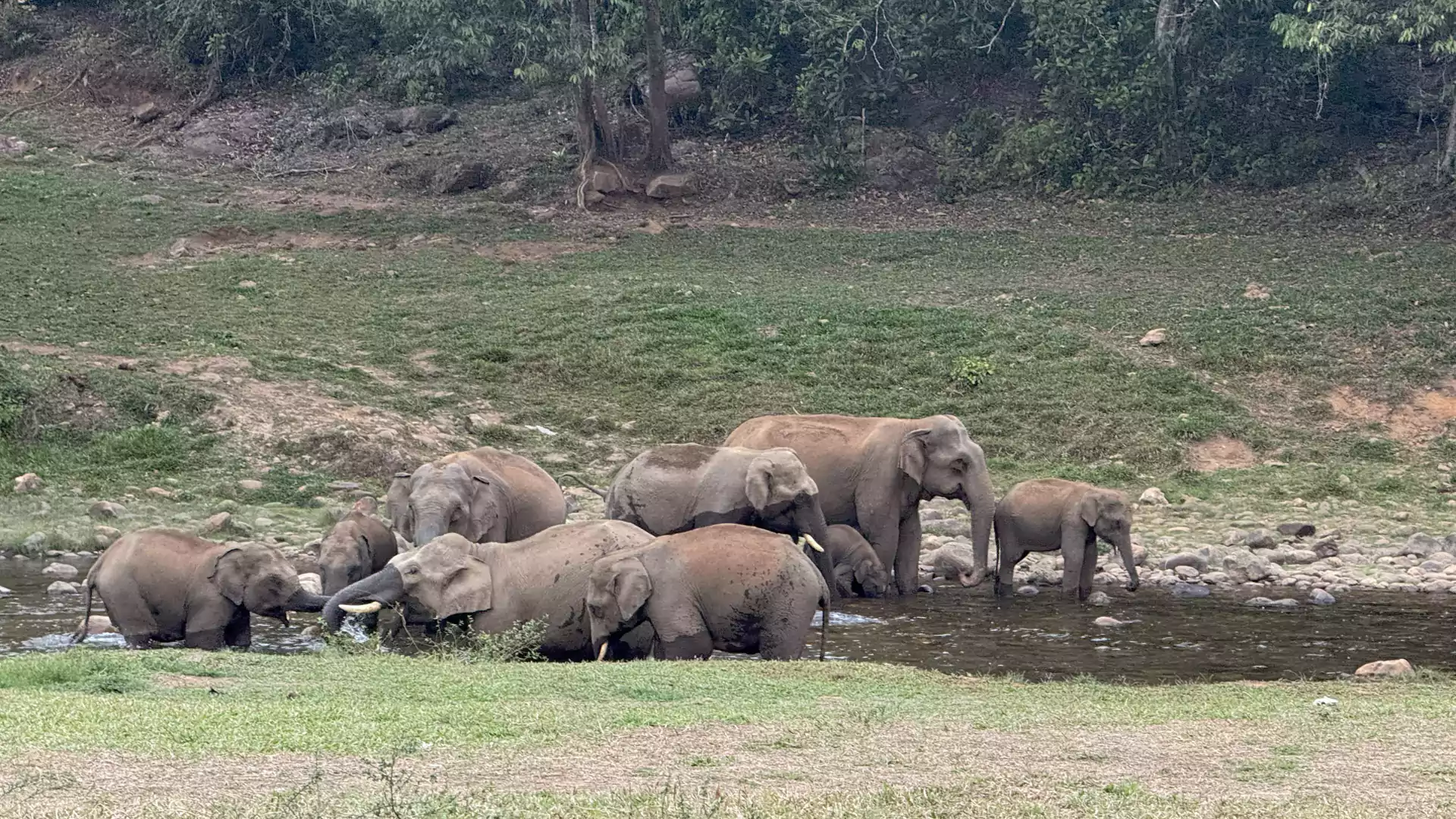
Mankulam — a quiet, genuinely rural village on the Adimali–Munnar road, off the main tourist track. Anakulam Elephant Village — “Elephant’s Pond,” where wild elephants have gathered to drink mineral-rich river water for over a century. Jeep-safari access only, usually combined with waterfalls and a river crossing. Distance: ~40–43 km from Munnar town — but on the Adimali side, meaningfully closer to Sceva’s Garden Home.
Marayoor & Kanthalloor (optional day trip — frequently asked about by guests) Roughly 40 km from Munnar, across the Ghats’ rain shadow — Kerala’s only natural sandalwood forest, prehistoric dolmens and cave paintings, and (unusually for Kerala) sugarcane and jaggery farms. A full-day trip, best combined with Chinnar Wildlife Sanctuary.
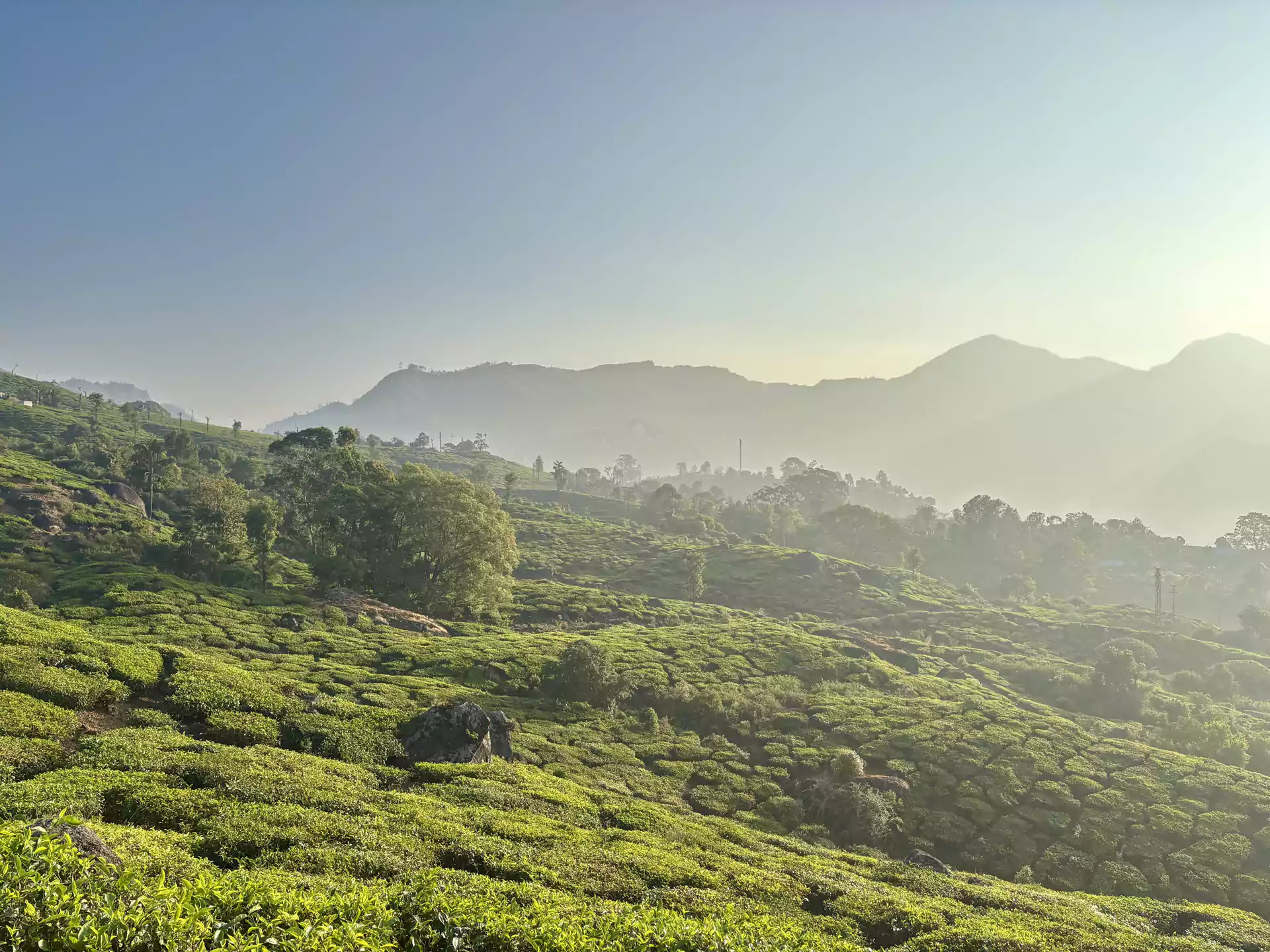
DTPC/KFDC Botanical Garden (Rose Garden) — ~2–4 km from Munnar town. Roses, orchids, medicinal herbs, tea-estate backdrop. Nominal entry (~₹20–50). Photo Point — 500m further, the classic tea-picker photoshoot spot.
1 Day in Munnar — Tea Museum → Eravikulam National Park → Mattupetty Dam → Echo Point. A tight but complete introduction.
2 Days in Munnar — Day 1 as above. Day 2: Top Station scenic drive, Kundala Lake, Botanical Garden, easy evening at leisure.
3 Days in Munnar — Add Anayirangal Dam + Kolukkumalai sunrise (very early start) on Day 3, or swap in Chokramudi trek for the more active traveller.
4 Days in Munnar — Add Marayoor & Kanthalloor as a full-day excursion, or the Meesapulimala trek for serious hikers.
5 Days in Munnar — All of the above at an unhurried pace, plus Mankulam/Anakulam Elephant Village and a full rest day for the garden, pool, and simply being still — which is, honestly, what most guests say they wish they’d scheduled more of.
Tell us a little about your travel plans, and we’ll help you choose the right room, suggest local experiences, and make your visit to Munnar truly memorable.
The sightseeing above is what brings people to Munnar. This is what makes them remember it:
This is the Munnar most guides don’t mention — because it isn’t a place on a map. It’s how you spend the hours between the places on the map.
September to May. December–February is coolest and clearest; April–May is warmer but still pleasant at altitude.
Yes, if you don’t mind rain and mist — the hills are at their greenest, waterfalls are full, but some trekking routes and viewpoints get slippery or close.
2–3 days covers the essentials comfortably; 4–5 days lets you add treks, Kolukkumalai sunrise, and offbeat villages without rushing.
Yes, for Meesapulimala — arranged through KFDC Munnar in advance. Chokramudi and most day walks don’t require formal permits, just a nominal entry/guide fee.
Very much so — Eravikulam, the boating lakes, and gentle garden walks suit most ages. Steeper treks like Meesapulimala are better for older children and adults.
Regularly at Anakulam Elephant Village and around Mattupetty/Anayirangal Dam early morning — though sightings are never guaranteed, as these are wild animals.
The NH85 via Adimali — roughly 4–4.5 hours by road, and the route most private taxis and buses take.
No formal permit, but booking your entry ticket online in advance is strongly recommended to skip queues.
Typically late January/February through March–April for the Nilgiri Tahr calving season — always confirm current dates before planning your trip.
Layered clothing — warm layers for early mornings/evenings, comfortable walking shoes, and rain protection outside the dry season.
For sunrise chasers, yes — it’s regularly described as one of the most spectacular sunrise views in South India, but it is a genuine early-morning, full-effort trip.